
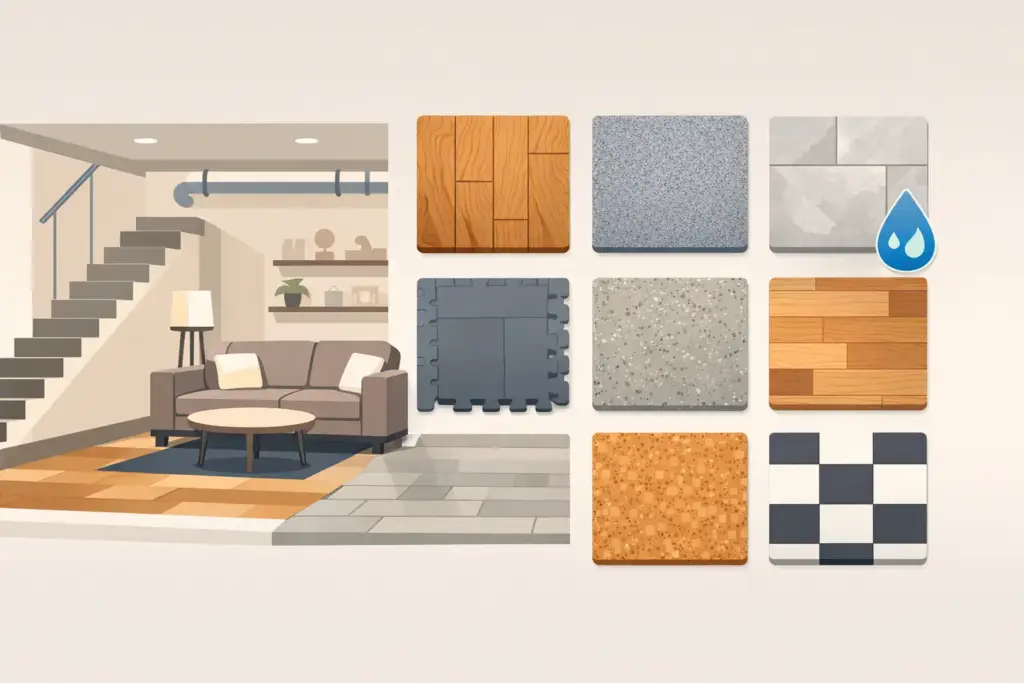
A basement floor can look perfect on installation day and still become the weak point of the entire renovation six months later. In Brooklyn and across NYC, that usually comes down to one issue – basements behave differently than the rest of the home. They run cooler, they deal with more moisture, and they need materials that can handle real-life use without turning maintenance into a constant chore. That is why choosing the best basement flooring options starts with performance first and style second.
If you are finishing a basement for a family room, home office, gym, guest area, or rental-style setup, the right floor should support how you actually plan to use the space. It should also work with the condition of the slab, the ceiling height, and the moisture profile of the room. A floor that looks great upstairs may be a poor fit below grade.
What makes basement flooring different
Basements are not standard interior rooms. Even when they feel dry, they can still hold ground moisture, humidity, or occasional seepage. In older NYC homes, concrete slabs are often uneven, and that affects both installation quality and long-term wear.
That means the best basement flooring options usually share a few characteristics. They resist moisture, tolerate temperature shifts, feel comfortable underfoot, and hold up well in a heavily used space. Some homeowners prioritize warmth and softness. Others want the most durable finish possible with the least upkeep. There is no single right answer for every basement, but there are clear front-runners depending on the room’s purpose.
Luxury vinyl plank is the most versatile choice
For many homeowners, luxury vinyl plank sits at the top of the list, and for good reason. It delivers the look of hardwood while handling basement conditions far better than traditional wood flooring. It is water-resistant or fully waterproof depending on the product, relatively easy to maintain, and available in a wide range of finishes that fit modern renovations.
In a finished basement, vinyl plank works especially well because it balances style, durability, and cost. It can suit a playroom, media room, office, or lounge without feeling too utilitarian. Many newer products also have attached underlayment, which helps with sound and comfort.
That said, quality matters. Lower-grade vinyl can telegraph imperfections from the slab underneath, and poor installation often leads to shifting or edge lifting. If the concrete is uneven or damp, prep work is not optional. Done correctly, though, this is one of the strongest all-around flooring choices for below-grade living space.
Tile is one of the toughest basement flooring options
Tile remains one of the best basement flooring options when moisture resistance is the top priority. Porcelain tile in particular performs extremely well in basements because it is dense, durable, and easy to clean. If you are building a basement laundry area, secondary bathroom, mudroom-style entry zone, or bar area, tile deserves serious consideration.
Its biggest advantage is stability. Tile does not warp like wood, and it stands up very well to humidity and spills. It also gives a polished, long-lasting finish that can raise the overall feel of the basement when paired with the right lighting and wall treatments.
The trade-off is comfort. Tile can feel cold and hard, which is not always ideal for a family hangout or play space. Area rugs can help, and radiant heating can make a major difference if your renovation budget allows for it. Without that added warmth, tile is often best in utility-forward basement zones rather than every square foot of the space.
Engineered wood can work, but only in the right basement
Homeowners often ask whether they can use wood flooring in a basement. Solid hardwood is usually not the answer. It is too vulnerable to moisture and seasonal movement. Engineered wood is a better option, but even then, it depends on the basement conditions.
Engineered wood has a real wood surface layer with a more stable core, so it handles environmental changes better than solid planks. If the basement is dry, properly waterproofed, climate controlled, and professionally finished, engineered wood can create a high-end look that connects the basement visually to the upper floors.
Still, this is not the most forgiving material on the list. It requires careful moisture testing, proper subfloor planning, and the right product selection. In a basement with any history of dampness, even occasional issues, there are safer choices. This is less of a default recommendation and more of a strategic one for well-prepared spaces.
Epoxy flooring is practical for utility and mixed-use basements
Epoxy flooring is often associated with garages, but it also works well in unfinished or semi-finished basements. If your goal is a clean, durable surface for storage, laundry, workout equipment, or workshop use, epoxy can be a smart option.
It creates a sealed surface over concrete, which helps resist stains and makes cleaning simple. It also gives a more finished appearance than bare slab without requiring a full floor build-up, which can be useful in basements where ceiling height is limited.
Where epoxy falls short is comfort and acoustics. It does not create the warm, residential feel most homeowners want in a TV room, guest suite, or office. It is a strong utility solution, but usually not the top pick for a basement intended to feel like true living space.
Carpet tiles are better than wall-to-wall carpet
Traditional broadloom carpet in a basement can be risky. Even in a mostly dry basement, carpet can trap moisture, hold odors, and become difficult to salvage if water gets in. That is why carpet tiles tend to be the better soft-surface option below grade.
Carpet tiles offer warmth and comfort, and they are especially useful in home offices, kids’ areas, and media rooms where noise control matters. If one section gets damaged, individual tiles can often be replaced instead of tearing out the entire floor.
The limitation is obvious: soft flooring and basements are never a perfect match when moisture is part of the equation. Carpet tiles make more sense in a basement that has already been professionally waterproofed and conditioned. They can work well, but they should not be your first move if the basement’s moisture control is still uncertain.
Sheet vinyl is budget-friendly and dependable
Sheet vinyl does not get the same attention as luxury vinyl plank, but it remains a practical basement flooring material. It is affordable, water-resistant, and available in styles that are far more attractive than many homeowners expect.
Its biggest benefit is coverage. Because it comes in large continuous rolls, it has fewer seams than plank or tile products, which can help in moisture-prone spaces. It also feels softer underfoot than tile and is easier on the budget if you are finishing a basement with cost control in mind.
The downside is appearance and repairability. If part of the floor gets damaged, replacing one section is not as straightforward. Design-wise, it can also feel less premium than plank flooring in a high-end remodel. For a practical basement renovation, though, it remains a solid contender.
Rubber flooring fits gyms and play areas
If your basement is becoming a home gym, rubber flooring deserves a place on the shortlist. It absorbs impact, reduces noise, and protects the slab from weights and equipment. It also provides better traction than many hard-surface materials.
Rubber is not usually the right fit for an entire finished basement unless the design is intentionally athletic or play-focused. But in a dedicated zone, it performs extremely well. Interlocking tiles also allow for flexible installation and easier replacement if needed.
For homeowners creating multi-use basements, rubber often works best as part of the plan rather than the whole plan. A gym corner with rubber flooring can sit comfortably alongside vinyl plank or tile in the surrounding area.
Polished concrete is modern, but not for everyone
Polished concrete can look sharp in a modern basement, especially in urban homes with a clean, minimal design direction. It is durable, low-maintenance, and does not require layering another material over the slab.
This option makes the most sense when the existing concrete is in good enough condition to be repaired and finished properly. It can be a smart choice for contemporary lounges, studios, or flexible entertainment spaces.
The challenge is comfort. Concrete is hard underfoot and can feel cold, especially in winter. It also tends to amplify sound unless the room includes enough soft finishes to balance it out. Visually strong, yes. Universally comfortable, not always.
How to choose the right floor for your basement
The best decision usually comes down to three questions. First, how dry is the basement really? Not how dry it looks on a good day, but how it performs through humid months and heavy rain. Second, how do you want the space to function every day? A guest suite needs a different floor than a laundry room or gym. Third, how much prep work is required before any flooring goes down?
This is where many basement projects go off track. Homeowners compare finishes before they evaluate moisture, slab condition, and subfloor needs. The flooring itself matters, but the assembly beneath it matters just as much. A well-installed mid-range product will usually outperform a premium product installed over a poorly prepared basement floor.
In Brooklyn homes, especially older properties, getting this right often means taking a full-room view rather than a flooring-only view. Waterproofing, leveling, insulation, transitions, and ceiling clearance all affect what makes sense. A trusted remodeling team can help you avoid paying twice for a floor that looked good in the showroom but was never right for the space.
A better basement starts from the ground up. Choose a floor that fits the room you are building, the conditions you actually have, and the level of durability your home needs – and the entire renovation will feel stronger because of it.