
Remodeling Services Prospect Heights, Brooklyn
Remodeling Services Prospect Heights, Brooklyn for homes and businesses, with help for kitchens, basements, and new construction. Contact ESG Builders today.
Why Choose ESG Builders
Home Remodeling Prospect Heights, Brooklyn
Home remodeling can address how a residence looks, feels, and functions from day to day. Planning may involve opening or reorganizing a layout, updating worn surfaces, improving storage, replacing finishes, or coordinating improvements across several rooms. The right scope depends on the household’s priorities, the existing conditions, and which elements are worth retaining.
Material choices also need to balance appearance with maintenance and everyday use. Flooring, cabinetry, fixtures, lighting, trim, and wall finishes should be considered together rather than as isolated selections. For kitchen-focused projects, ESG Builders’ kitchen remodeling information provides additional detail. Customers comparing service coverage can also review NYC remodeling options alongside the broader Brooklyn remodeling services offering.
Commercial Remodeling Prospect Heights, Brooklyn
Commercial remodeling requires decisions based on how the property supports business operations as well as how the completed space should look. A project may involve interior reconfiguration, finish updates, customer-facing areas, workspaces, storage, lighting, or other improvements tied to the intended use. Early planning should identify operational requirements, construction dependencies, and any portions of the property that need to remain accessible while work proceeds.
Scheduling and coordination become especially important when remodeling could affect employees, customers, deliveries, or neighboring uses. A clearly defined scope helps establish sequencing and makes material lead times easier to account for before construction begins. Property operators evaluating service-area options may also review remodeling coverage in Staten Island or the Bronx when planning work across multiple properties.

Planning a Remodeling Project in Prospect Heights
A well-defined remodeling scope connects design goals with the realities of the existing property. Before selecting finishes, it is useful to identify what needs to change structurally or functionally, what can stay, and which decisions could affect later phases of work. This creates a clearer basis for discussing construction requirements, material allowances, sequencing, and the overall project approach.
Defining Scope, Design Decisions, and Scheduling
Start by separating essential changes from preferences. Essential items might include repairing deteriorated materials, changing an inefficient layout, updating building systems as required by the project, or addressing conditions uncovered during planning. Design preferences can then be evaluated around those needs, including flooring, cabinetry, fixtures, colors, surfaces, lighting, and storage.
Customers should also ask what is included in a proposed scope and what remains dependent on investigation, selections, approvals, or site conditions. The schedule can be influenced by demolition, inspections, trade sequencing, product availability, and changes made after work has started. Selecting key materials early can reduce uncertainty, particularly when cabinets, specialty fixtures, or other ordered products affect subsequent work.
For a broader view of the company’s service category, customers can review ESG Builders’ remodeling services across Brooklyn. Those comparing other service areas can separately review Pelham Gardens, Bronx and Fieldston, Bronx.
New Construction
New Construction differs from remodeling because planning begins with a new building scope rather than adapting an existing finished space. Even so, many of the same disciplined decisions apply: defining intended use, coordinating plans, selecting materials, considering building systems, and establishing a realistic construction sequence. Owners comparing renovation with a more extensive construction approach should clarify the desired outcome before assuming one route is appropriate.
Code requirements can affect structural, fire-safety, energy, accessibility, and other project considerations depending on the nature of the work and applicable rules. Building codes and resilience guidance from FEMA provides useful background on why modern codes matter. For broader national market context rather than project-specific guidance, the residential construction data from the U.S. Census Bureau is another useful reference. Applicable requirements for a particular property should be confirmed as part of project planning rather than inferred from general resources.
Basement Remodeling
Basement Remodeling should begin with existing conditions. Before planning finished walls, flooring, storage, recreation space, or other lower-level improvements, it is important to consider signs of water intrusion, dampness, ventilation concerns, ceiling heights, utility locations, and how mechanical or electrical components may affect the layout. These issues can influence both material selection and the sequence of work.
Customers exploring a lower-level project can review ESG Builders’ dedicated basement remodeling service information. Moisture management deserves particular attention because an attractive finish system does not correct an underlying moisture source. The vapor barriers and moisture control guidance from the U.S. Department of Energy provides useful general information about moisture movement and vapor retarders. When comparing specific approaches for a lower level, the available basement remodeling solutions can help frame the construction scope around both intended use and existing conditions.
Kitchen Remodeling
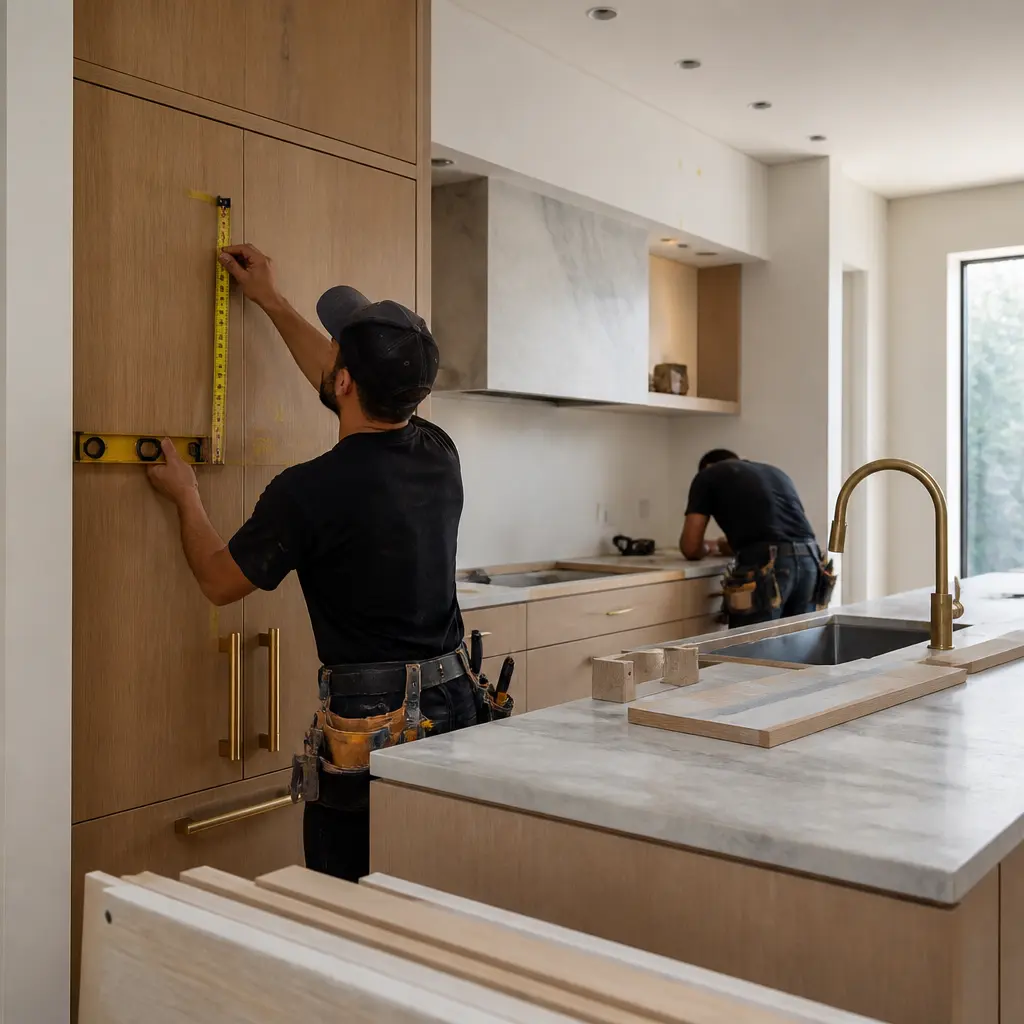
Kitchen Remodeling involves a tightly connected set of decisions because cabinetry, counters, appliances, plumbing, electrical work, lighting, flooring, ventilation, and circulation may all affect one another. Layout planning should start with how the kitchen needs to function. Placement of work areas, storage, clearances, doors, and adjacent rooms can matter as much as the visual finish.
Selections should also be made with installation order and lead times in mind. Cabinet dimensions can influence countertop measurements; appliance specifications can affect cabinetry and utility planning; and lighting decisions may need to be settled before walls and ceilings are completed. ESG Builders provides further information about kitchen remodeling, while property owners comparing specific approaches can also explore custom kitchen remodeling considerations in the context of their larger renovation.
Building and Code Considerations
Remodeling plans should account for applicable permits, approvals, inspections, and code requirements rather than treating them as afterthoughts. The exact requirements depend on the property and work being proposed. Changes involving structural elements, building systems, occupancy, or other regulated conditions can have different implications from purely cosmetic work. For properties in multifamily or managed buildings, owners should also determine whether separate building procedures, work-hour rules, insurance documentation, or alteration requirements apply.
Planning these constraints early helps owners compare proposals on a like-for-like basis. A lower initial scope can look attractive but may not be comparable if necessary work, finish allowances, disposal, protection, or coordination responsibilities are excluded.
What to Evaluate When Hiring a Remodeler
Before selecting a remodeling provider, customers should look beyond the final number and understand how the proposed work has been defined. Useful points to evaluate include:
- Whether the written scope clearly identifies the areas and work included.
- How materials, fixtures, and finish selections will be handled.
- Which items are allowances, exclusions, or dependent on existing conditions.
- How construction phases and necessary trade coordination will be sequenced.
- How changes discovered or requested during construction will be documented.
- What permit, approval, and inspection responsibilities apply to the proposed work.
These questions make it easier to compare approaches based on scope rather than price alone. Property owners with work in other parts of the city can also find service information for the West Village and Tribeca without confusing those locations with the Prospect Heights service area.
Preparing for a Remodeling Discussion
Before discussing an estimate, assemble the information that can make the initial conversation productive: the rooms or spaces involved, major problems to solve, desired layout changes, preferred finishes, any known property restrictions, and scheduling considerations. Photos, sketches, inspiration images, existing plans, or product preferences can help communicate priorities even when the design is not finalized.
It is also useful to identify decisions that remain flexible. A homeowner may have a firm layout goal but still be comparing finishes, while a business operator may prioritize phasing and operational continuity over specific aesthetic selections. Clarifying those priorities gives the project discussion a stronger starting point. When the scope is ready to be reviewed, property owners can contact ESG Builders to discuss the proposed remodeling work and next steps.
Contact Us
Have a question? Give us a call today Or fill up the form —we’d love to discuss your project and help turn your ideas into reality.
Free, No-Obligation Estimates
Excellent rating
Based on 47 reviews
 You can clearly see the difference in quality when compared to other projects nearby. The structure feels strong, and finishing work is top-notch.
 Lillian WongI had a great experience working with this team. From start to finish, they were professional, responsive, and extremely detail-oriented. The quality of the workmanship was excellent, and everything was completed on time and exactly as discussed. They kept the job site clean and communicated clearly throughout the entire process. I would definitely recommend them to anyone looking for reliable and high-quality construction work.
 Joshua ZaffESG Builders delivers what they promise. Whether for living or investment, their projects offer long-term value and peace of mind.
 Nicholas greyThe apartment layout is spacious and practical. Attention to detail in finishing, electrical work, and plumbing is clearly visible.
 Walter ClarkCompared to other builders in the area, they offer superior construction quality at a fair price. No hidden charges and complete transparency throughout the process.
 Louis CarrWe remodeled our master bathroom. The crew was so nice, clean and pleasant. It came out beautifully! We will definitely recommend ESG to all our friends and family, it was a real pleasure working with ESG Builders!
 Ruth GoldbergGreat company high quality
 islom yuldashevEddie did a full remodel to my living room. He was on time as promised. Delivered a bueatiful finish and was always giving me updates (communication). My home is extremely modern thanks to him and did it in time for the holiday weekend. He was also accurate in my finish material costs.
 SamReally enjoy working with them
 A. D.
A. D.